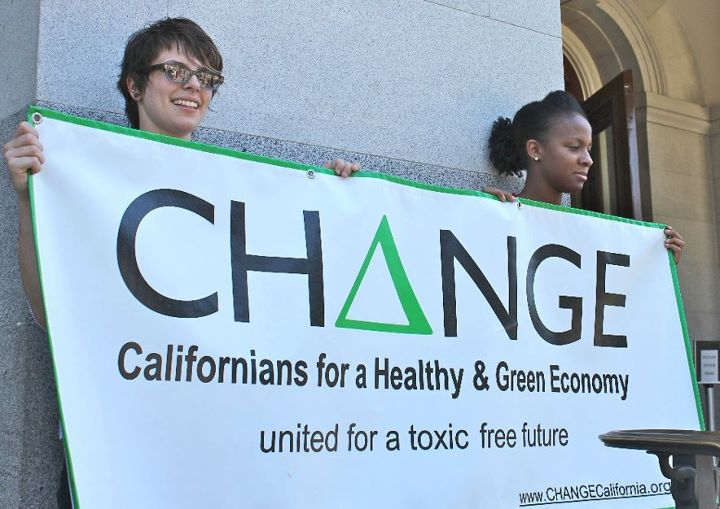
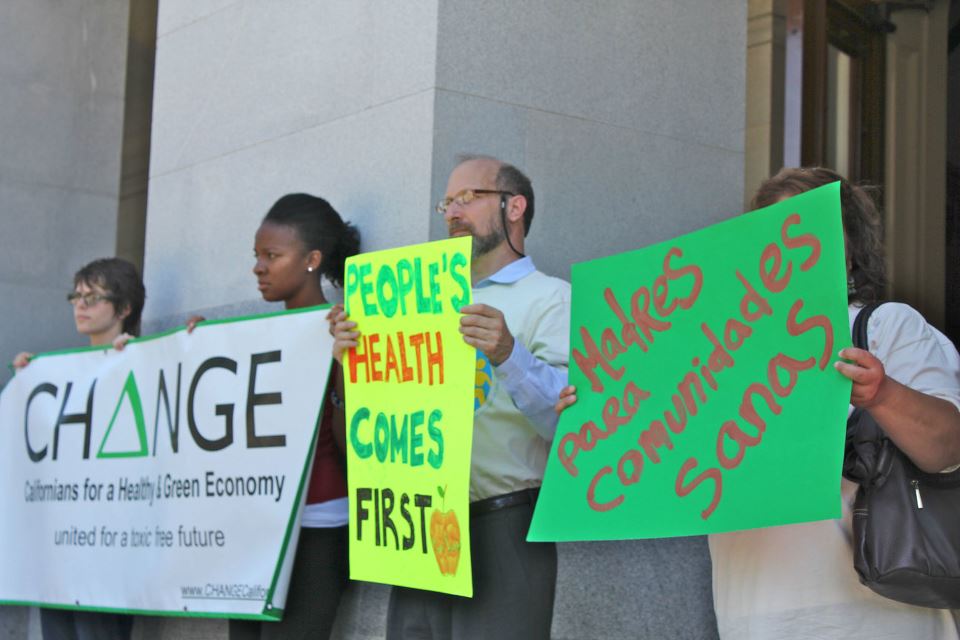
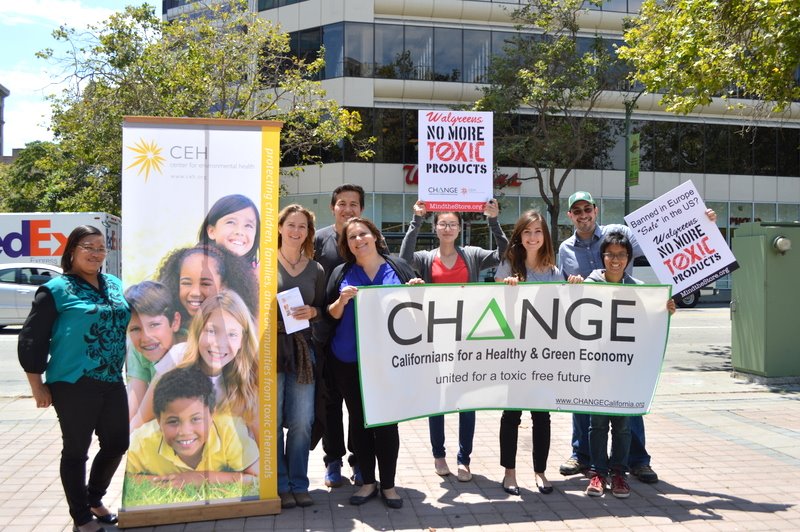


CHANGE (Californians for a Healthy & Green Economy)
A growing coalition of environmental health, policy, labor, environmental justice, interfaith, and other organizations who are working to create a better system for regulating toxic chemicals in California.Community voices, especially low-income and communities of color, are vital to the process of determining how chemicals should be regulated in California.
Workers, low income and communities of color are disproportionately-impacted by the health effects of chemicals in the environment and in products. We recognize that these efforts will only be worthwhile if community voices are at the table helping craft solutions to the problem. We are in the process of bringing more communities of color to participate in the process and invite you to join us.
Easy as Cupcake: Get Cadmium out of Kids' Jewelry
In the seventh story of our ongoing series, "Independence from Toxic Chemicals," Ryan Berghoff reports on why California should get the Cadmium out of children's jewelry.Senator Fran Pavley’s bill, SB 929, which sets strict limits on the use of cadmium in children’s jewelry, recently passed the California Senate with a large majority vote (26-10) and is now on its way to the governor for his signature. At the present time, federal law restricts cadmium, a known carcinogen, only in painted toys. There are currently no restrictions on the use of cadmium in children’s jewelry, and recent reports show that some jewelry has high concentrations of cadmium.
Read more...California: The Leader in Lead Regulation
In the sixth story of our ongoing series, "Independence from Toxic Chemicals," Ryan Berghoff and Christina Medina describe the history of lead regulation in California
Lead, as you may know, is one of the more infamous toxic heavy metals, and rightfully so- it’s an undisputed toxic chemical that is quite ubiquitous. It was even honored with the prestigious “Toxie” award for Lifetime Achievement in Harm. It has been linked to higher rates of infertility in women, an increased risk of heart attacks, strokes, and high blood pressure, as well as neurological and developmental problems in children. Take a look at our post on California’s Prop 65 to see some of the unexpected places we’ve found lead. Who’d ever think that diaper rash cream, lunch boxes and electronic cords could have so much in common!
Read more...BPA in California’s Babies – What’s the Hold Up?
In the fifth story of our ongoing series, "Independence from Toxic Chemicals," Ana Mascareñas gives an overview of California's BPA legislation.
This week, the California legislature plans to wrap up its legislative session and make many decisions about the services, priorities, and the budget of our state. Amongst the very tough decisions, sending a bill to protect infants and toddlers from exposure to a toxic chemical -- a measure already passed by both the houses but pending one procedural vote in the Senate -- should NOT be considered a tough decision. SB 797(Pavley) would prohibit the synthetic estrogen, bisphenol-A (BPA) in baby bottles, sippy cups, food and formula containers meant for children 3 and younger.
Read more...Upcoming Event: OEHHA Hazard Trait Regulations
A critical part of the Green Chemistry Initiative is
identifying what kind of information is required to go into the Toxic
Information Clearinghouse required by SB 509.
The Green Chemistry Initiative laws require the Office of Environmental Health
Hazard Assessment (OEHHA) to identify these hazard traits – things like whether
a chemical is a carcinogen or a reproductive toxin; is it toxic to wildlife or
is it dangerous because of how we are exposed to it? These hazard traits will also be used to
assess safer products in the Safer Product Regulations being developed by the
Department of Toxics Substances Control.
A draft of proposed regulations has been issued by OEHHA (Office of
Environmental Health Hazard Assessment), which will look specifically at hazard traits, environmental and toxicological
end-points, and other relevant data. The Department of Toxic Substances Control
(DTSC) will then use information from the clearinghouse to help identify
chemicals of concern in consumer products to make
OEHHA will be holding a workshop to
get public comment concerning these regulations on Monday August 23, from
1:00 p.m. to 4:00 p.m. in the Klamath Room at the Cal/EPA Headquarters
Building at 1001 I Street in
AB 289: Chemical Testing Requirements
In the fourth story of our ongoing series, "Independence from Toxic Chemicals," Ryan Berghoff describes California's AB 289 from 2006.
Every year more than 55,000,000 pounds of all chemicals are released in the state of California. There are over 85,000 chemicals that are commercially available today, and many are known to cause cancer, damage the brain, or disrupt the nervous and reproductive systems. Analytical test methods only exist for approximately 30 percent of all chemicals, and thus there is a large body of chemicals that remains completely untested. In order to test these numerous chemicals, laboratories within the California Environmental Protection Agency must use millions of taxpayer dollars to develop detection methods for finding chemicals in the air, water, soil, and human body, placing a significant financial burden on Cal- EPA. That’s where AB 289 comes in.
Read more...
Donate to CHANGE